Preliminary Working Draft
Hoosier Village Strategic Planning Project
This artifact comes from my coursework in PBHL‑H401: Strategic Planning in Health Organizations. It showcases my ability to analyze a senior living organization using core strategic planning tools, including environmental assessment, service area analysis, competitive analysis, internal analysis, and a full SWOT evaluation. This project demonstrates my skills in data interpretation, organizational assessment, and strategic thinking within a real-world healthcare context.
Executive Summary - Hoosier Village is a nonprofit retirement community set on 300 acres in Zionsville, Indiana. As the flagship of the BHI Senior Living network, led by CEO John Dattilo, it focuses on person-centered care, independence, and faith-based service. Residents can choose from independent and assisted living, memory care, skilled nursing, and rehabilitation. With these options, Hoosier Village is a top choice for older adults looking for long-term security and quality care. Hoosier Village’s strategy focuses on resident experience, hiring and keeping great staff, improving the campus, and providing safe, high-quality care. These goals are backed by a clear mission, strong financial management, and a history of excellence. As more people in Boone County and nearby areas look for senior living, it is important to use data to guide decisions and encourage teamwork across departments. This plan explains how Hoosier Village will stay a lively, innovative, and lasting community that improves the lives of older adults. •For Hoosier Village to succeed in the long run, it needs to anticipate new needs in senior living while staying true to its values of compassion, integrity, and service. As more older adults live in Central Indiana, the community will need to update its care models, offer more services, and invest in technology that makes things safer, more efficient, and more engaging for residents. Building stronger partnerships with healthcare providers, local groups will help ensure excellent care and support workforce growth. With careful planning and a focus on doing things well, Hoosier Village is ready to stay a leader in senior living and a trusted resource for residents, families, and the community.
Directional Strategies- To direct operations, foster growth, and enhance the quality of life for senior citizens, Hoosier Village Retirement Community in Zionsville, Indiana, has created the "Senior Enrichment Initiative" in line with its mission.
Mission Statement: “At Hoosier Village, our mission is to enhance the quality of life for older adults in a secure environment that promotes their independence and supports their spiritual, physical, and emotional needs. Our community is built on core values that reflect our commitment to providing exceptional care and service:”
Directional Strategies:
Mission Driven Care -
-
Hoosier Village’s strategy centers on its mission to "enhance the quality of life of senior adults within a secure environment that supports their needs, values, interests, and independence while advancing personal and spiritual development." This mission reflects the community’s devotion to personal care, honoring each resident’s dignity.
Strategic Growth and Expansion
-
Nearly 32 new buildings are coming to Hoosier Village, set to expand the 300-acre senior living community in Zionsville by 26.8 acres. Approved unanimously by the Zionsville Plan Commission on May 15, the southwestern campus addition will feature 89 attached two- and three-story townhomes, a dog park, and a community garden—enhancing both residential options and quality of life for current and future residents.
Directional Strategies
-
The Health Center offers a full range of Skilled Nursing services for Hoosier Village residents requiring advanced health care. The team consists of compassionate and caring, Medicare-certified Skilled Nursing professionals who consistently address each individual needs. To promote and preserve every resident’s quality of life, Hoosier Village offers engaging activities, social programs, weekly chapel services, and an intergenerational foster grandparents initiative with local elementary students.
Long Term Care Services
-
The long-term care services include physical, speech, and occupational therapies; pharmacy services; in-house physician visits; in-house podiatrist care; audiology screenings and hearing aid adjustments; diagnostic lab and x-ray services; transportation services; and salon and spa services.
Environmental Assessment
Hoosier Village Environmental Assessment
-
Capital Investment and Cost Pressures
-
Technology and smart living
-
Health Wellness Technology
-
Consumers And Demographics
-
Care Services and Quality Standards
-
Infrastructure and Sustainability Expectations
Environmental Assessment Capital Investment and Cost Pressures
-
Must comply with IDOH and CMS regulations, including increasing staffing and quality standards.
-
Nonprofit reporting requirements add additional oversight and accountability.
-
Rapid growth and the $20M Cedarwood project increase exposure to rising labor and construction costs.
-
BHI’s acquisition strategy expands financial risk, though strong demand continues to sustain revenue.
-
Growing population of adults 75+ increases demand for wellness programs and memory care.
-
Resident expectations now include fast connectivity, telehealth access, and digital health tools.
-
Need to maintain modern infrastructure supporting EHRs, telehealth, high‑speed internet, and smart‑living technologies.
-
Technology adoption among older adults is rising, shaping service expectations.
-
New development must meet zoning, building codes, and energy‑efficiency regulations.
-
Ongoing compliance with state and federal long‑term care standards is required.
-
The 300‑acre campus requires extensive land management, maintenance, and environmental stewardship.
-
Expansion projects must consider environmental impact and sustainable development practices.
Environmental Assessment Technology and Smart Living
-
An increasing number of older adults are adopting technology, which presents opportunities to integrate telemedicine, wearable health devices, and smart home features into care services.
-
The use of safety and monitoring technologies has identified that optimal sensor/method.
-
combinations are critical for designing effective AAL fall‑detection systems.
-
Non‑wearable sensors (cameras, radar, infrared, acoustic, thermal) provide higher precision and F1‑scores.
Environmental Assessment Health Wellness Technology
-
Telehealth has become an essential modality for expanding healthcare access, enhancing.
-
continuity of care, and minimizing unnecessary in-person visits. It facilitates chronic disease.
-
management, post-acute follow-up, and routine patient monitoring.
-
AI‑enhanced decision support that flags abnormal readings.
-
Mobile health apps for communication, education, and self‑management.
-
Wearables that track vitals, mobility, and activity levels.
Environmental Assessment Consumers and Demographics
-
Aging Population: The U.S. senior population, particularly those aged 65 and older, is growing.
-
rapidly. This demographic shift is driving increased demand for senior living communities such as Hoosier Village.
-
Lifespan: Recent advancements in healthcare have increased life expectancy, creating a need for extended residency options and comprehensive care services in retirement communities.
-
Use of Technology: Older adults are rapidly adopting digital technology. They now use
-
smartphones, apps, smart-home tools, and even AI at rates approaching those of younger generations, reshaping expectations for senior living communities.
Environmental Assessment Care Services and Quality Standards
-
BHI plans to build 20 independent living townhomes in each phase, starting in Spring 2024 and continuing in Spring 2025, for a total of 40 units. Currently, more than 400 households are on the waitlist for independent living at Hoosier Village.
-
Strong reputation for professionalism and quality interactions during tours and care
-
discussions.
-
Provides high‑end amenities and a “ritzy,” upscale environment that supports comfort and resident satisfaction.
Environmental Assessment Infrastructure and Sustainability Expectations
-
Residents increasingly expect energy‑efficient buildings, walkable outdoor spaces, and environmentally conscious design.
-
New construction projects, including the Cedarwood expansion, must comply with current Indiana building codes and state sustainability standards.
-
Aging infrastructure across the 300‑acre campus requires ongoing upgrades to remain compliant, safe, and competitive in the senior‑living market.
-
Indiana’s Energy Code guides requirements for HVAC efficiency, insulation, lighting and overall building performance.
Service Area Analysis
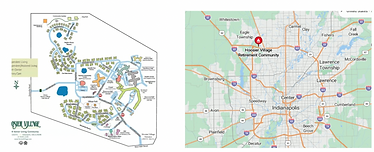
Service Area Map
Population
Population Map
-
Marion County - 38,633
-
Hamilton County - 379,704
-
Hendricks County - 190,629
-
Boone County - 78,773
-
Montgomery County- 38,633
-
Clinton County – 32,895
Population Change
Age Distribution
Median Household Income
Competitive Analysis
-
Organizational Growth & Scale
Hoosier Village shows solid financial results, with estimated annual revenue of $17.3 million.
This places the organization among Indiana’s top nonprofit continuing care retirement
communities. The number of employees has grown by 22%, which shows stability and growth in
a tough labor market. Revenue per employee is about $243,000, showing that Hoosier Village
runs efficiently and remains competitive among senior-living providers.
-
Location and Campus Advantages
Hoosier Village sits on a 300-acre campus near Zionsville, giving it a strong edge in the Indianapolis senior-living market. The large property allows for future growth, plenty of green space, walkable outdoor areas, and many housing choices. This size helps the community grow over time, keeps residents happy, and sets Hoosier Village apart from others.
-
Service Line Depth and Care Continuum Strength
Hoosier Village is a Life Plan Community that helps residents at every stage of aging with a full range of care.The campus includes independent living, assisted living, memory care, and skilled nursing, so residents can easily adjust as their needs change. This approach gives long-term security, steady care costs, and peace of mind through personal support. With a variety of homes, quality amenities, and an active lifestyle, Hoosier Village provides both independence and complete care.
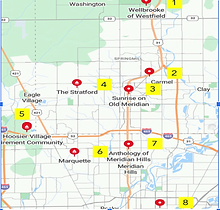
Service Area Competitor Maps
-
1 – Wellbrooke of Westfield
-
2 – Woodland Terrace
-
3 – Sunrise on Old Meridan
-
4 – The Stradford
-
5 – Zionsville Meadows
-
6 – Marquette
-
7 – Anthology of Meridian Hills
-
8 – American Village
Internal Analysis
Bed Utilization
SWOT Analysis
-
Strengths
-
Solid brand reputation in Central Indiana - Hoosier Village is widely recognized for quality, stability, and long‑standing community trust.
-
Mission‑driven nonprofit identity - BHI’s faith‑based, resident‑centered philosophy differentiates HV from for‑profit competitors.
-
Large, attractive, and well‑maintained campus - The 300‑acre environment supports wellness, independence, and lifestyle marketing. The campus includes beautiful landscaping, walking trails, wellness programs, dining options, and social activities that improve residents’ quality of life.
-
Robust continuum of care - Independent Living, Assisted Living, Memory Care, and SNF on one campus increases resident retention and lifetime value.
-
Experienced leadership and steady governance - Strong administrative continuity enables long‑term planning and operational consistency.
-
High resident contentment and loyalty - Many residents choose HV for its community culture, amenities, and perceived safety.
-
Devotion to Non-Profit Mission – As a non-profit organization, Hoosier Village can focus on reinvesting in resident services and quality improvements rather than on profit-driven initiatives.
-
Weaknesses
-
Aging infrastructure in legacy buildings - Some areas require modernization to stay competitive with newer communities.
-
Complexity of managing a large, multi‑building campus - Coordination across departments, buildings, and service lines increases operational friction.
-
Limited brand visibility among younger seniors - HV is well‑known to older cohorts but less visible to the next generation of retirees.
-
Technology gaps - Opportunities exist to improve EHR integration, resident‑facing tech, and workflow automation.
-
Staffing challenges - Recruitment and retention pressures affect all service lines, especially nursing and dining.
-
Slow adoption of hospitality‑style service models - Competitors increasingly market luxury, concierge‑style experiences.
-
Opportunities
-
Growing senior population in Central Indiana - The senior population in Central Indiana is growing, which means there will be steady long-term demand for independent living, assisted living, and memory care services.
-
Campus modernization and expansion - Modernizing and expanding the campus through renovations, new amenities, and updated units can help attract residents with higher care needs and greater financial resources.
-
Technology‑enabled care models - Adding smart-home features, telehealth, fall-prevention technology, and digital engagement tools can enhance residents' experience.
-
Strategic partnerships - Working with hospitals, accountable care organizations, universities, and community groups can help attract more referrals and expand the brand’s reach.
-
Lifestyle and wellness programming - Expanding fitness, social, and enrichment programs can help HV stand out in a competitive market.
-
Philanthropic development - As a nonprofit, HV can use donor support to fund capital projects and programs that help residents.
-
Threats
-
Hoosier Village faces growing competition from new senior living communities, modern facilities with luxury amenities, and aggressive marketing, all of which threaten its market share.
-
Rising labor costs and workforce shortages - Industry wide staffing pressures increase expenses and raise the risk of service disruptions.
-
Economic volatility - Market downturns influence entrance-fee decisions and long-term financial planning.
-
Regulatory changes - New CMS staffing mandates, infection control requirements, and reporting burdens increase operational complexity.
-
Shift toward home-based care - More seniors are choosing to age in place, reducing demand for traditional senior living.
-
Insurance and reimbursement pressures - Medicare Advantage and PDPM dynamics may affect skilled nursing revenue.




What I learned
I chose this assignment because it represents one of the most comprehensive and challenging projects I completed in PBHL‑H401: Strategic Planning in Health Organizations. I spent a significant amount of time analyzing Hoosier Village using real data, strategic frameworks, and industry research, which pushed me to think like a healthcare leader rather than just a student. This project strengthened my skills in environmental assessment, competitive analysis, and long‑term planning, which are essential to my future career in health services management.
I am especially proud of this work because it brought together everything I’ve learned about organizational strategy, data interpretation, and senior‑living operations. It also reflects my growing interest in leadership roles within healthcare and my ability to create clear, professional, and actionable strategic insights. This assignment showcases both my analytical abilities and my commitment to improving care for older adults.
Program Competencies
-
Demonstrate effective written communication and oral communication skills.
-
Collaborate in teams utilizing interpersonal skills, recognizing and demonstrating sensitivity to different points of view.
-
Describe the structure and functioning of health delivery, public health, and health services organizations and the importance of a population health perspective.
-
Apply quality, strategic planning, management, organizational behavior, marketing, and human resource theories and tools to manage organizational resources, confront industry challenges and improve outcomes in health organizations.
-
Apply data and health information technology to inform organizational performance and decision making.
-
Utilize financial tools, principles, concepts, and practices to analyze budgets and financial documents to determine the financial performance of health services organizations.